
Political tempests | 1600s
Introduction
During the 1600s, Scotland was torn by wars with English kings James VI and Charles I, by battles between Catholic traditionalists and supporters of new churches in England and Scotland, and by the Puritan revolution that was led in England by Oliver Cromwell, who invaded Scotland in 1650. The wars continued through later reigns of Charles II, James VII of Scotland (James II of England) and William of Orange (Netherlands), who usurped James VII’s son, also named James, and replaced the Jacobite cause with moderate and popular mediations of the tensions.
Early 17th Century
—In Edinburgh in 1604, George Meldrum (son of Andrew Meldrum and Katherine, née Gordon) was sentenced to death by beheading for the attempted slaughter of his younger brother Andrew Meldrum, who he captured and imprisoned at and imprisonment of his younger brother Andrew Meldrum at Dumbrek, then Ernesyde, for some weeks before Andrew escaped. This episode followed Andrew’s acquisition of the Dumbrek estate that George Meldrum had earlier inherited from their father. [MacGregor, 2021, vol. 6, p. 813.]
—After surviving attempted murder and imprisonment by his brother George, Andrew Meldrum of Darley, Dumbrek and Muir of Fyvie sold Dumbrek to James Ord in 1615. He acquired the Muir of Fyvie estate from George Gordon of Fight in 1618, then sold it (or part of it) for 4850 merks to William Gordon of Cotton in 1625. In 1635, this property was acquired by Patrick Urquhart. [MacGregor, 2021, vol. 6, p. 814.]
—George Meldrum of Haltoun (son of the William Meldrum who was murdered at Haltoun manor by his brother George Meldrum’s gang in 1596) had another charter for the lands of Auchterless by 1597. In 1607 he married Elizabeth Ogilvy, daughter of George Ogilvie, the 1st Earl of Carnousie, who bore him three sons: William Meldrum of Haltoun, Patrick Meldrum and James Meldrum. Burdened by debt, George Meldrum mortgaged both Haltoun and Auchterless to his father-in-law in 1619; the same year that his sister, Elspeth, became George Ogilvie’s third wife. George Meldrum redeemed both properties in 1628, three years after George Ogilvie died. [MacGregor, 2021, vol. 6, pp. 815–816.]
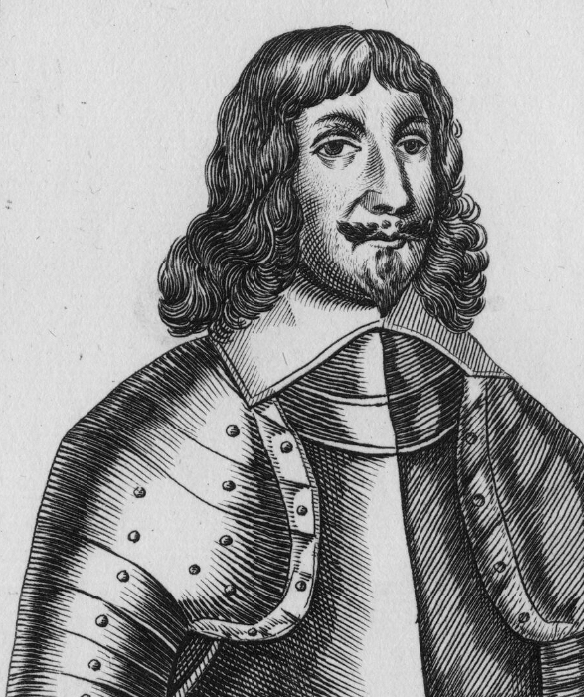
—Sir John Meldrum spent 36 years serving the Stuart kings of England and Scotland, James VI and Charles I, but he turned against Charles I’s increasing support for Catholicism to support Cromwell’s Puritan campaign. Under James VI, Meldrum was granted some land in the Irish county of Fermanagh and, after serving in the wars of the Low Countries, was knighted at Windsor on 6 August 1622. Under Charles I, he took an expedition to Rochelle for the war with France and served under Gustavus Adolphus as colonel in Spruce to foot’. Before his knighthood, he purchased some patents for maintaining lighthouses in Scotland, where his taxing of passing ships was controversial with competing interests. In the early 1640s, he led numerous battles against the Royalists, but he died in May 1645, during the siege of Scarborough Castle in Yorkshire. [‘The most famous Meldrum of all’, Clan Meldrum Society history papers (Facebook page).]
—Patrick Meldrum of Eden, son of Thomas Meldrum and Isabella, née Urquhart, married Jean Seaton, daughter of George Seaton of Schethin, around 1616. After Isabella mortgaged the Eden property to Aberdeen merchant Andrew Meldrum in 1633, Patrick Meldrum failed to maintain the repayments and another debt to John Gordon of Buckie, so he forfeited his estate. [MacGregor, 2021, vol. 6, p. 811.]
—John Meldrum of Leathers (Laithers) married Margaret Duff, daughter of John Duff. Their son, George Meldrum of Crombie (1616-1692), was the minister of Marnoch and Laird of Crombie Castle.
—James Meldrum of Seggie, eldest son of Sir David Meldrum of Seggie and Agnes née Leslie, sold the lands of Seggie to David, Lord Carnegie, in 1614. He died childless by 1622. His next younger brother, William Meldrum, also died childless by 1638 and his lands of Gogar were transferred to Sir David’s next eldest son, George Meldrum of Tullibody, who transferred them (heavily indebted) to the youngest son, Robert Meldrum. Robert died, also childless, before George Meldrum, who gained Robert’s estate of Tullibody, before he (George) died in 1681. [MacGregor, 2021, vol. 6, p. 827.]
—George Meldrum of Crombie married Jean Duff. Their eldest daughter, Jean Meldrum, was the heiress of Crombie and the mother of William Duff. A second daughter was Helen Meldrum, mother of Lieutenant-General Abercrombie of Glashaugh. Their third daughter was Isabel Meldrum, mother of James Ogilvy of Rothiemay. [Douglas, Baronage, 1798, p. 138.]
—John Meldrum of Reidhill argued with the Laird of Frendraught about the latter’s scanty payment for Meldrum’s wounds representing Frendraught in a quarrel with John Gordon of Rothiemay. Meldrum stole two of the laird’s horses, then refused to appear in court on a charge of theft so was declared a rebel. Meldrum then sheltered in the house of his brother-in-law, John Leslie of Pitcaple, who soon died after being shot in the arm by an accomplice of Frendraught’s. [Smith, 1875, p. 565.]
—In 1648, the Scottish Parliament passed an ‘Act of posture anent the putting of the kingdom in a posure of war for defence’, in which several mMeldrums were named among new sherrifs for their localities: Robert Meldrum of Tullibody a sherrif for Clackmannan; Peter Meldrum of Lichnet was a sherrif of Banff; and John Meldrum of Auchnevir was a sherrif of Aberdeen.
Mid-Late 17th Century
—A Meldrum is mentioned as one of some army officers who held circuit courts through the south of Scotland before the execution of King Charles II in 1685; particularly in the shire of Lanerck, where the Declaration [of Indulgence, aka Declaration of the Liberty of Conscience; allowing religious freedom] had been proclaimed, and fined, imprisoned, tortured or killed ‘persecuted sufferers’. [Brown, 1784, part 2, p. 296].
—Robert Meldrum, the minister at Yester (aka Gifford, East Lothian), was listed by Daniel Defoe as one of some ‘Episcopal Ministers who possessed Presbyterian churches after the Revolution 1690, who had not Complyed with the present Church Government in Scotland’. [Defoe, An historical account of the bitter sufferings …, p. 2.] In March and April 1696, Robert Meldrum and others were jailed in Newgate prison, England, for high treason against King William III of England. Two years later they petitioned for justice from the King and the British Parliament, with a ‘broadside’ paper that they signed as English subjects. [Most sad and deplorable case of Robert Blackburne, John Bernardi, Robert Cassills, Robert Meldrum and James Chambers, humbly presented to the Parliament of Great Britain, in Broadsides from the Crawford Collection, National Library of Scotland, online.] Robert Meldrum died in 1699.