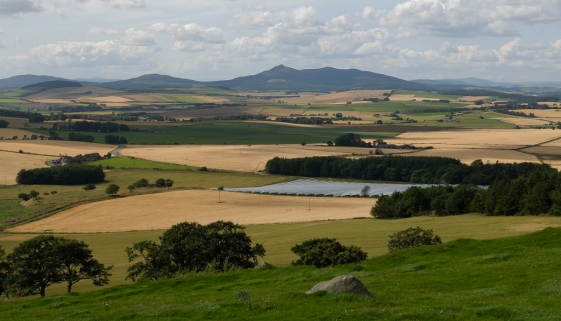
The Scottish clan name Meldrum has been traced back to people living in Aberdeenshire and Fife during the 13th century. Different medieval Celtic spellings of Meldrum were recorded; including Meall Druim, Meigdruim, Melgdrum, Melgedrom, Meldrome, etc. These word combinations were said to mean either ‘ridge of a bare hill’ or ‘noble ridge’; which could refer to the area’s dominant landscape element, the Oxen Craig peak of the Benachie range of hills.
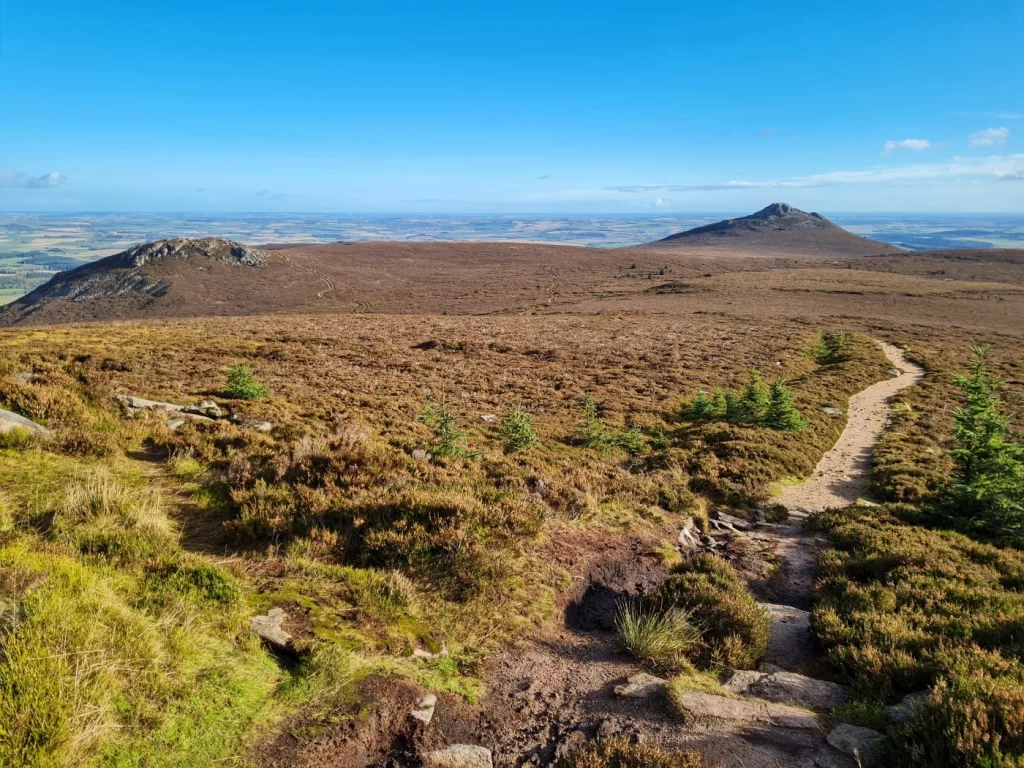
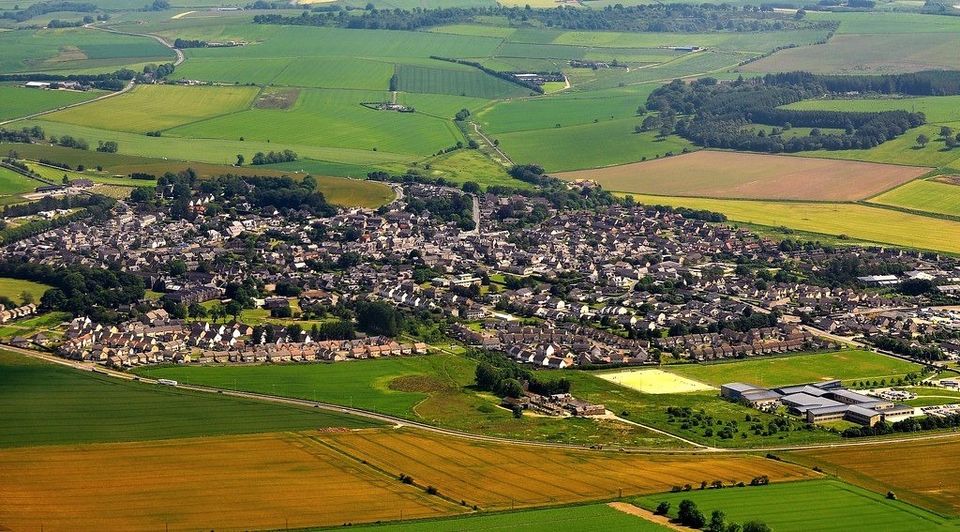
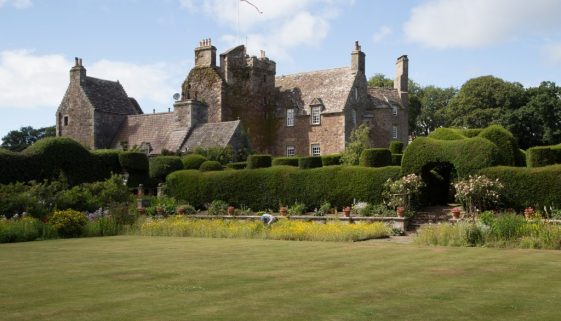
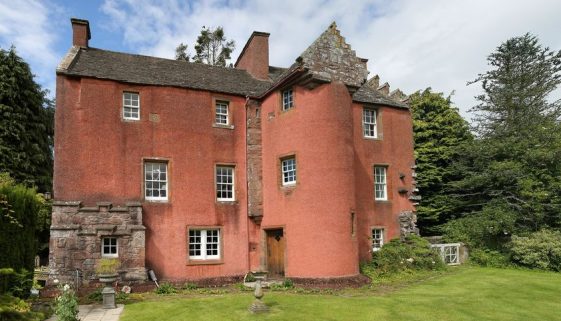
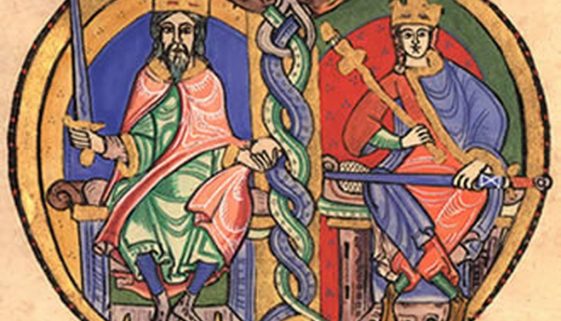
The first written records of the name Meldrum relate to Philip de Phedarg, who changed his name to Sir Philip Meigdrum when he was knighted by King Alexander III around 1249. He was the son of Philip de Phedarg, who was granted the Barony and estate of Meigdrum by the Abbot of Arbroath around 1236. The estate was best viewed from the hill of today’s Oldmeldrum village, where Sir Philip built the stone tower house that is the earliest part of today’s Meldrum House hotel and golf club.
Their family name Phedarg, or Fedarg or Phendarg, came from the Picts (painted people) who occupied the north-east of Scotland (then named Alba) during the Iron Age before 900 AD. After constantly battling Roman invaders, the pagan Picts gradually were converted to Christianity and absorbed Gaelic language and culture.
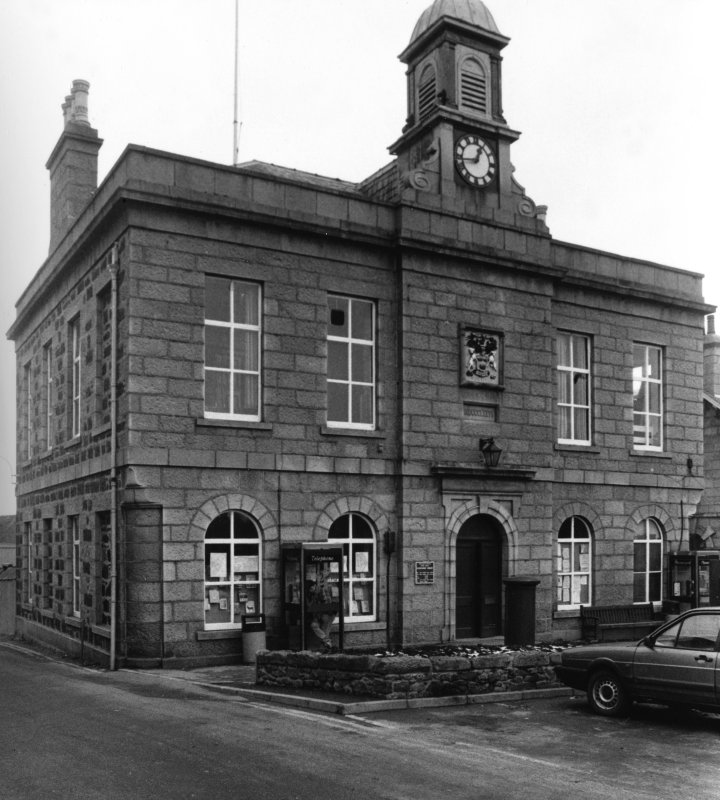
This description of Oldmeldrum parish in the mid-19th century was published by Samuel Lewis in his 1851 book, A Topological Dictionary of Scotland.
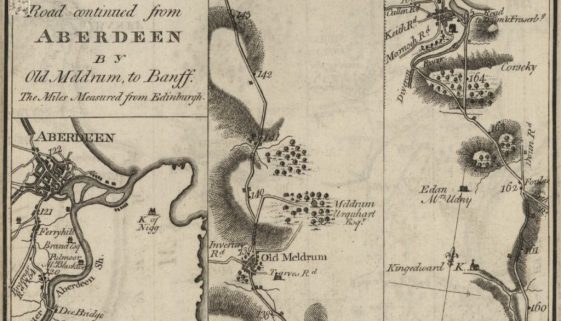
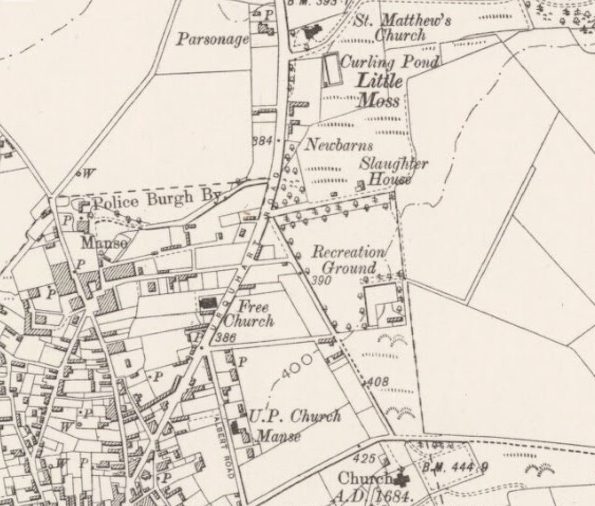
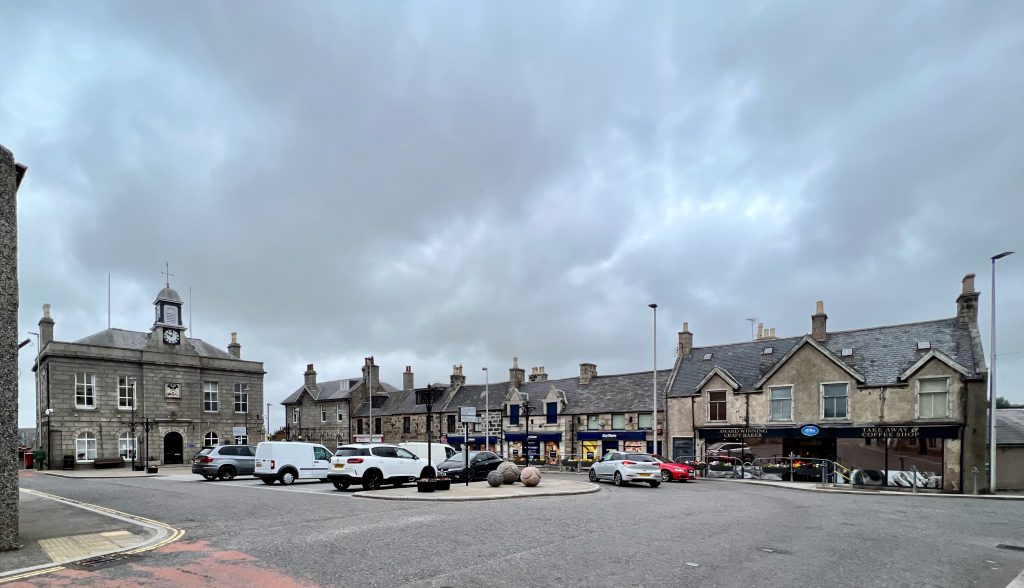
Meldrum, a parish and burgh of barony, in the district of Garioch, county of Aberdeen; containing 1873 inhabitants, of whom 1102 are in the burgh, 17 miles (SSE) from Turriff, and 17¾ miles (NNW) from Aberdeen. This place was anciently called Bethelnie, and is supposed to have derived that appellation, signifying in the Hebrew language ‘the House of God’, from the early erection of a church, which at that time was the only religious edifice within a very extensive district. Its modern name, which is of Celtic origin, ‘signifying ridge of a hill’, appears obviously to have been derived from the general acclivity of the surface, which towards its northern extremity attains a considerable degree of elevation. The town is situated on the turnpike-road from Aberdeen to Banff and consists of several irregularly formed streets; the houses are mostly well built, and many of them of handsome appearance. The cotton manufacture is pursued to some extent, there being two establishments belonging to the manufacturers of Aberdeen, in which some persons of both sexes are employed in hand-loom weaving, under the superintendence of agents residing in the town. The knitting of worsted stockings also affords occupation to many of the females, and there are a distillery and a brewery; the different handicraft trades requisite for the supply of the neighbourhood are carried on here, and there are shops for the sale of various wares.
Meldrum was erected into a burgh of barony by charter of Charles II., in 1672, in favour of James Urquhart, Esq., and continued for some time to be governed by two baron-bailies nominated by the superior; but there is at present neither any public magistrate nor any regular police. The town-hall is a handsome building surmounted with a spire. A weekly market, which is abundantly supplied with provisions of every kind, is held on Saturday: a market for cattle and grain is held every alternate week during the winter and spring; and there are fairs for hiring farm-servants in May and November. The post-office has four deliveries daily; and facility of communication is afforded by the turnpike-road from Aberdeen and Banff, which passes through the town, and for five miles and a quarter through the parish.
The parish is about seven miles and a half in extreme length, varying in breadth from two to five miles, and comprising an area of 7474 acres, of which 5774 are arable, 500 woodland and plantations, and the remainder moor and waste. Its surface is diversified with hills of no great elevation, of which a range extends across the parish from the north to the north-west. Several small rivulets flow in various directions and give motion to some corn mills. In the southern portion of the lands the soil is a strong rich loam, superincumbent on a bed of clay, and in the northern parts of a thinner and lighter quality. The crops are oats, bear (barley), and a small proportion of wheat, with potatoes and turnips. The system of husbandry is improved; the lands have been drained and inclosed partly with stone dykes and partly with fences of thorn. The farm buildings are substantial and commodious, and well adapted to the extent of the farms.
Such has been the progress of improvement that the prize of the Aberdeenshire Agricultural Society, for the best-cultivated farm in the county, was awarded to the tenant of Bethelnie, in this parish. The cattle reared in the pastures are of the Old Aberdeenshire breed, with a few of the Teeswater; the sheep are of the South-Down, the Leicester, and the native breeds. In this parish the plantations are chiefly ash, elm, oak, plane, beech, and the various kinds of fir, all of which are in a thriving state. The substrata are mostly whinstone, limestone, and hornblende-rock, of which last detached masses are occasionally found: the limestone was formerly wrought, but the workings have been discontinued. The annual value of real property in the parish is £4999. Meldrum House, the seat of B. C. Urquhart, Esq., superior of the burgh, is a spacious and elegant mansion, completed in 1840, and beautifully situated in a demesne enriched with ancient timber and with thriving plantations of modern growth.
For ecclesiastical purposes the parish is within the bounds of the presbytery of Garioch and synod of Aberdeen. The minister’s stipend is about £224, with a manse, and a glebe valued at £28 per annum; patron, Mr. Urquhart. Meldrum church, an ancient structure erected in 1654, and repaired and reseated in 1810, is centrically situated, and contains 700 sittings. There are places of worship for members of the Free Church and United Presbyterian Church, and an episcopal chapel. The parochial school is well attended: the master has a salary of £28, with an allowance of £6 in lieu of a dwelling-house, and the fees average about £14 per annum; he has also the interest of a bequest of £200 for the gratuitous instruction of poor children. The ground-floor of the town-hall has within the last few years been set apart as a schoolroom, for the instruction of females in the usual branches of a religious, moral, and industrial education. On the lands of Bethelnie were some vestiges of a Roman camp, which have been levelled by the plough; and on the site of the original church is a burying-ground, in which is the sepulchral vault of the Meldrum family. There are some remains of an ancient chapel on the farm thence called Chapel-house, with a well inclosed by masonry. Near it was found within the last few years a rudely formed stone coffin containing an urn, with a human skull and some bones; and on the same farm were discovered two similar urns, placed under a kind of pavement.