
Diversities | 1400s
Introduction
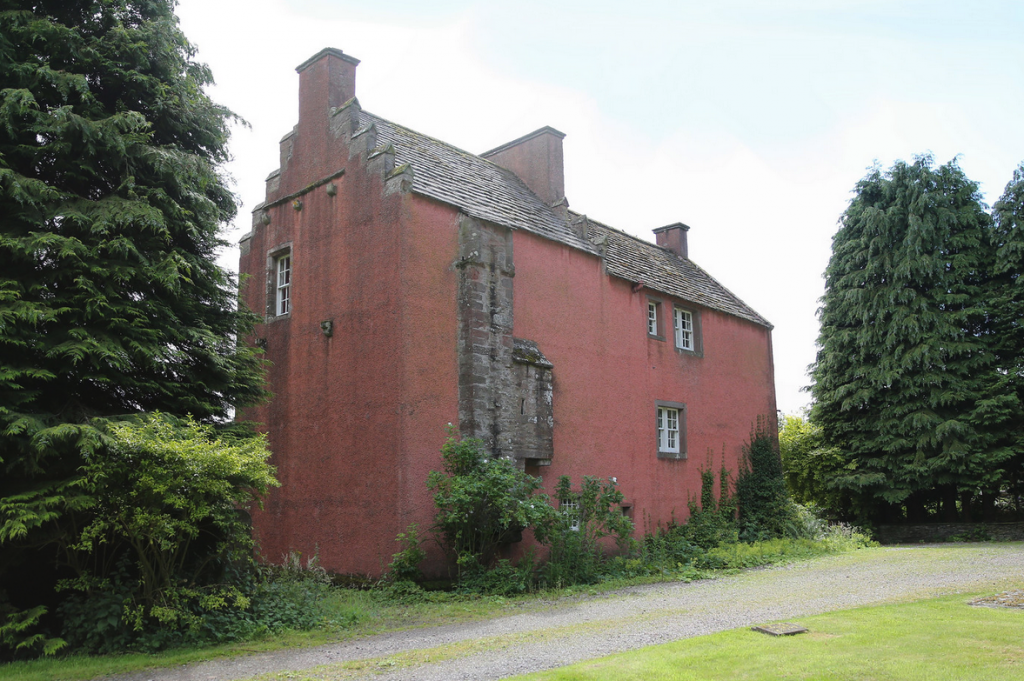
By the early 1400s, descendants of the first two Philips of Meldrum (father and son) were diversified through younger sons and daughters marrying spouses from other families. They began occupying stone tower houses on estates in other parts of north-east Scotland. Families named Meldrum were now based in four main locations: Bynnis, Cleish, Fyvie and Seggie. [MacGregor, 2021 [2016], vol. 6, p. xii.] These branches of Meldrums were not ‘of that Ilk’, meaning they were not part of the original baronial patriarchy where the title, ‘sirname’, lands and legal rights passed from a founding father (clan chief)to his eldest son. Instead they were known as ‘cadet’ branches of the clan.
Early 15th Century
—In 1402, William Myldrum, a Scots prisoner of war, was beheaded. [Black, 1946, p. 593, citing Bain, 1900, vol. 4, p. 646.]
—In 1423, another William Meldrum was referenced as being ‘of Petkary’ in a document relating to his granting of land at Tulenab to Alexander Irvine of Drum. By April 1425, this William Meldrum became known as ‘of Fyvie’. He had acquired half the barony of Fermartyn, including the lands of Fyvie and the castle, through his marriage to one of two daughters of the Lord of Fermartyn, Sir Henry Preston, who died around 1420. [MacGregor, 2021, vol. 6, p. 808.]
—After William Meldrum of Fyvie died (probably in 1437), his son Alexander de Meldrum of Fyvie, resigned his lands of Banchry-Devenich to the Abbot of Arbroath and assumed his father’s lands of Fyvie and Petcary. He had married Lady Forbes, daughter of Sir Alexander Forbes of that Ilk and 1st Lord Forbes; she was termed ‘Lady Fyvie’ in early genealogical books. After Alexander de Meldrum died in 1444, her father was granted the ward of the lands of Fyvie until Alexander and Margaret Meldrum’s son, William Meldrum of Fyvie, came of age (by 1467). [MacGregor, 2021, vol. 6, pp. 809-810.]
—In 1432, Duncanus de Atholia, Dominus de Ranagh, was sent to England as a hostage for the King of Scotland’s ransom, in place of Sir William Meldrum, Laird of Meldrum of that Ilk in Aberdeenshire. [MacFarlane, 1750, vol. 2, p. 304.]
—By 1440, Archibald Meldrum of Cleish, who is presumed to be either the eldest son or grandson and heir of William Meldrum of Cleish, had inherited the family lands and was the armiger to Robert Erskine, Earl of Mar. He fathered three daughters: Annabel, Janet and Margaret Meldrum, who inherited his estate. [MacGregor, 2021, vol. 6, p. 820.]
— Mariota de Meldrum, Sir William Meldrum’s only daughter and heir, married William Seatton (Seton), younger son of Alexander, Dominus de Gordon. [MacFarlane, 1750, vol. 2, p. 304.] Marieta Meldrum, daughter of William Meldrum of that Ilk, married Sir Alexander Seaton’s second son, William; of whom descended the Seatons of Meldrum and their various branches. But in 1449, William Seaton’s father, Sir Alexander Seaton ‘laid aside the Sirname of Seaton and Assum’ed the Sirname of Gordon before the Nobility Assembled in Parliament’. [MacFarlane, 1750, vol. 2, p. 412.] Or was Marieta named Elizabeth? And did William die at the Battle of Brechin in 1452? [Black, 1946, p. 593, citing AEI (Aberdeen epitaphs and inscriptions by J.A. Henderson, ed.), 1907, p. 52.]
—Alexander Meldrum of Seggie, Fife, had a son, Alexander Meldrum. [‘Margaret (Meldrum) Bruce’, WikiTree website.] The younger Alexander Meldrum had three sons, David Meldrum of Seggie, William Meldrum and James Meldrum. [Macgregor, 2021, vol. 6, p. 822.]
—James Meldrum of Bynnys, son of an unnamed ‘Laird of Bynnies’ married Janet Meldrum, daughter and co-heir of Andrew Meldrum of Cleish. They had two sons, Archibald Meldrum of Bynnys and James Meldrum, before James senior died, by 1478. [MacGregor, 2021, vol. 6, p. 818.]
Mid-Late 15th Century
—Dame Janet Meldrum, a daughter of Meldrum of Scagie (Seggie?), married Sir ? Melvill of ? Their daughter, Margaret Melvill, married William Schevez of Kemback, Fife. [MacFarlane, 1750, vol. 2, p. 199.]
—William Meldrum of Fyvie (son of Alexander and Margaret Meldrum) was granted the lands of Scottston. He married Elizabeth Barclay, with whom he had a 1485 charter from the Abbot of Arbroath for the lands of Fivy, Meikle Gourdies, Little Gourdies, Saphock and other properties. They had two sons, George Meldrum and Thomas Meldrum, and a daughter, who is thought to have married Robert Innes, second son of James Innes of that Ilk. This William Meldrum of Fyvie died in 1507. [MacGregor, 2021, vol. 6, pp. 809-810.]
—Marjorie Meldrum, daughter of Sir Thomas Meldrum of Fyvie, had an illegitimate son, Patrick, with Sir William Lesley, 4th Laird of Balquhain and one of the knights who attended the coronation of King James I. Lesley, who died in 1464, had numerous children with his three wives and some illegitimate children with other partners. [MacFarlane, 1750, vol. 1, pp. 5, 65.]
—In 1459, Floremundus Meldrum was a juror on assize at Liston. [Black, 1946, p. 593, citing Edmonstone (Manuscripts of Sir Archibald Edmonstone of Duntreath), 1909, p. 80.]
—David Meldrum was a canon and official with the church at Dunkeld. [Dowden, 1912, p. 77.]
—David Meldrum of Seggie, eldest son of Alexander Meldrum (the younger) of Seggie, married a woman named Elizabeth, by whom he fathered Alexander Meldrum of Seggie (the third), then married Christine Pitcairn, by whom he fathered Henry Meldrum. David was given his father’s lands of Newhall, in the barony of Cambo, in 1468, and inherited the lands of Seggie after his father’s death by 1498. Henry, who was under age but due to inherit the lands of Petforky in Forfarshire, then became the subject of a custody dispute between his mother Christine and his stepbrother, Alexander.
—Annabel Meldrum, eldest daughter of Archibald Meldrum of Cleish, died by 1479 and her sisters,Janet and Margaret Meldrum, inherited Annabel’s third share of Archibald’s estate (which included Haltoun of Cleish, Middle Cleish, Tor, Bordland and Nevistoun).
—In 1477, Thomas de Meldrum was admitted as a burgess (councillor?) of Aberdeen. [Black, 1946, p. 593, citing NSCM (Miscellany of the New Spalding Club, Aberdeen), 1890-1908, vol. 1, p. 26.]
—In 1485, Janet Meldrum, widow of James Meldrum of Bynnys, signed a writ to leave her 1/6th share of the lands of Middle Cleish, half of the Doll estate, 1/6th of Bordland and 1/6th of Neviston, to her youngest son, James Meldrum. This caused her eldest son, Archibald Meldrum of Bynnys, to take legal action before the Lords Auditors, in 1494 and 1498. It appears that Archibald won his case because in 1505 and 1506 he transferred the cheyms of Cleish, Haltoun of Cleish, the Doleland of Bordland and Easter Nevinston to Robert Colville of Hilton. These charters were witnessed by Archibald’s son, William Meldrum of Bynnys, who later became famous as the subject of David Lyndsay’s Squyre Meldrum poems. Archibald Meldrum died before 1532.
—Margaret Meldrum, third daughter of Archibald Meldrum of Cleish, married Thomas Preston of Bynning and they had three daughters: Margaret Preston, Katherine Preston and Christian Preston. Margaret, the eldest daughter, inherited her father’s lands of Wester Binning in 1478 and a third share of her mother’s lands of Cleish in 1492. Around 1486 she married Robert Bruce, with whom she inherited Abbotsland in West Binning, in 1500. Christian Preston inherited the lands of Halton of Cleish, Middle Cleish, Tor, Bordland, Neviston and West Cleish in 1492. She married Sir Robert Livingston, who died in 1505, after her death in 1502-1503. Her lands were transferred to her brother-in-law, Robert Bruce, then to Robert Colville of Hilton.
—In 1486, John Meldrum, a Scottish merchant, was granted safe conduct to travel to England. [Black, 1946, p. 593, citing Bain, 1900, vol. 4, p. 1517.]
—From 1488-89 to 1514, Farnell Castle, the bishops’ residence near Farnell Cathedral, was occupied by Bishop William Meldrum (of Seggie). [Dowden, 1912, pp. 188-189; ‘William Meldrum (bishop)’, Wikipedia. William was wrongly named Walter Meldrum in Keith, 1755, p. 97.]
—In 1490, William Seaton (Seton) of Meldrum signed a charter to his son William, who was married to Elizabeth Lessly (Lesley). [MacFarlane, 1750, vol. 2, p. 450.]
—Alexander Meldrum, son of Alexander Meldrum of Seggie, married Eugenie (or Euphame) Boswell, daughter of David Boswell of Balmutto. They had three sons: Alexander Meldrum of Seggie (the fourth), Thomas Meldrum of Seggie and David Meldrum, who begame a burgess (councillor) of Crail, and three daughters: Margaret Meldrum, Grisel Meldrum and Elizabeth Meldrum. Their daughter, Margaret Meldrum, was born in Seggie about 1492. [‘Margaret (Meldrum) Bruce’, WikiTree website; MacGregor, 2021, vol. 6, p. 824.]