
Heraldry

Shields
When the Meldrum clan was established in the 13th century, many of Scotland’s now-famous traditions – such as kilts, tartans, bagpipes and heraldry – were generally unknown. However, the clan’s founding fathers, Philippus and Philip de Phendarg, were among an influx of knights from Normandy who transferred a custom of painting their long, pointed kite shields with bright colours and striking designs that could identify them on the battlefield when they wore closed helmets.
In north-west France, artistic monks hand-painted the shield designs of warriors into medieval manuscripts that later were named ‘armorial rolls’. These were official records of the ‘blazons’ – designs of fighting apparel – that warriors wore over their armour (coats of arms, crests), or carried (shields, escutcheons). These designs also adorned ceremonial banners and caparisons (robes worn by horses); especially at public events such as jousting tournaments.
The first known record of the Meldrum blazon (written description of a shield design) was among Scottish listings in the French Armorial de Berry, written in 1450. This entry read:
—Ceulx de melledron. Argent, two otters statant in pale Sable. [Armorial de Berry, 1450, Bibliothèque Nationale, Paris]
The Meldrum name did not appear in other early English and European armorials, which tended to include only a few Scottish entries. But Meldrum lairds of Fyvie Castle, and the Setons ‘of Meldrum’, were noted in most of Scotland’s first armorial registers, written in the 16th century.
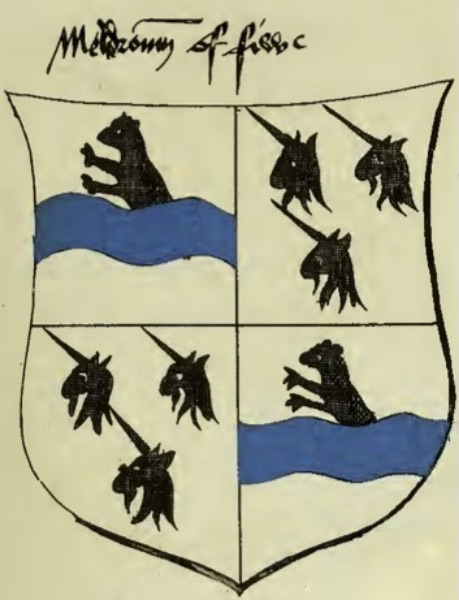
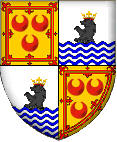
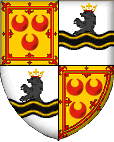
The ‘Meldrum of Fyfe’ entries described shields that were divided into quarters: two showing the Meldrum otter motif and two showing three unicorns from the shield of Sir Henry Preston, whose daughter transferred ownership of Fyvie to her Meldrum husband.
—Meldroum of fiwe. Quarterly. 1st and 4th: Argent, a demi-otter Sable issuant from a fess wavy Azure (Meldrum). 2nd and 3rd: Argent, three unicorns’ heads erased Sable (Preston). [Lyndsay, 1542]
—Meldrum of fyule. Quarterly. 1st and 4th: Argent, a demi-otter rampant Sable issuing from a bar wavy Azure (Meldrum). 2nd and 3rd: Three unicorns’ heads erased Sable (Preston). [Queen Mary’s Roll, 1562]
—Meldrv of Fyfe. Quarterly. 1st and 4th: Argent, three otters passant Sable (Meldrum). 2nd and 3rd: Argent, three unicorns’ heads erased Sable (Preston). (Forman, 1563]
—Meldrum of Fyvie. Quarterly. 1st and 4th: Argent, issuant from a bar wavy Azure in base a demi-otter rampant Sable (Meldrum). 2nd and 3rd: Argent, three unicorns’ heads couped Sable (Preston). [Dunvegan, c1600]
Mottos
The first-known Meldrum motto was ‘per mare et terras’ (by sea and land); perhaps a reference to Meldrum origins on the French side of the sea dividing England from Europe.
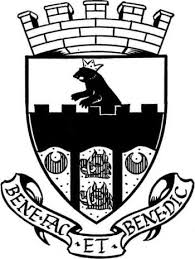
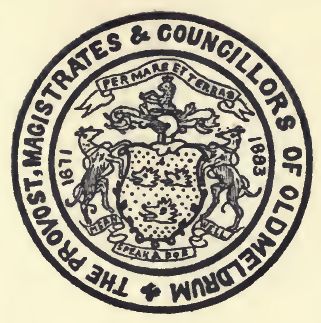
As recently as the late 19th century, this French term was displayed on a banner surmounting the shield in the heraldic seal of the provost, magistrates and councillors of the Aberdeenshire town of Oldmeldrum. This burgh was ruled by the 13th and 14th century barons who owned today’s Meldrum House country hotel).
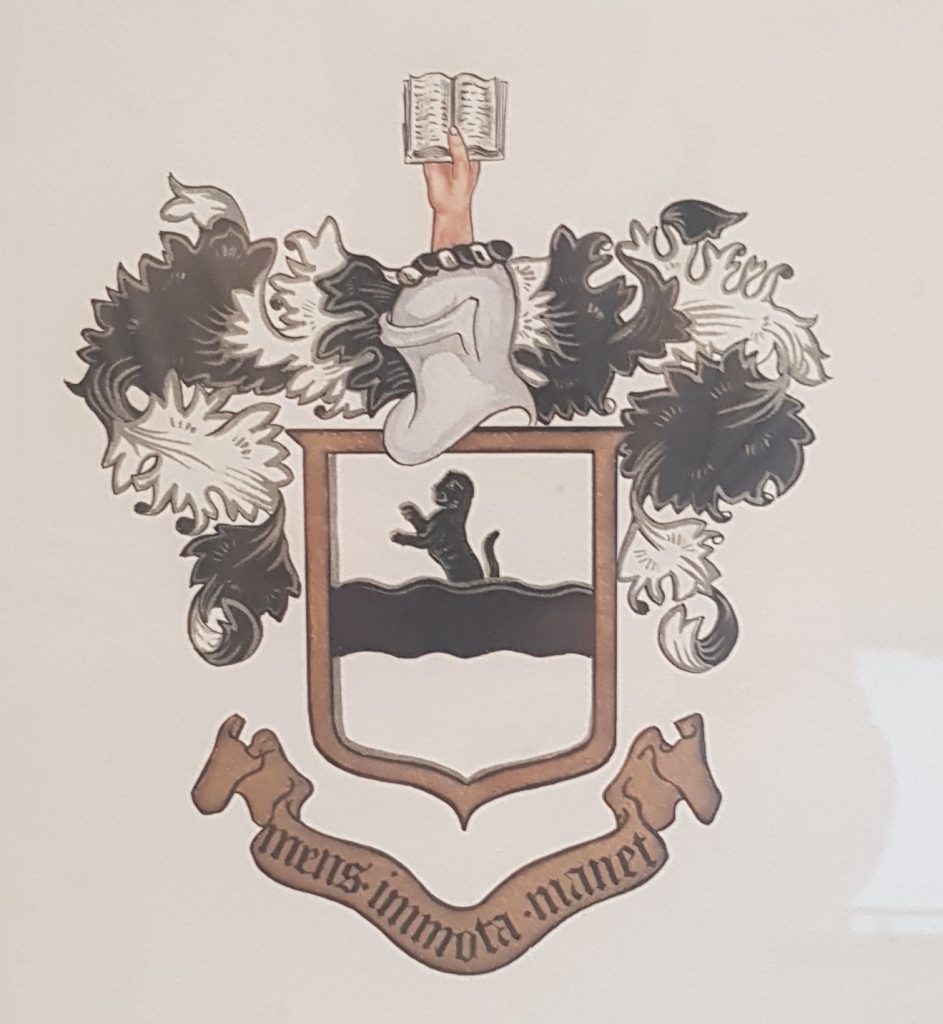
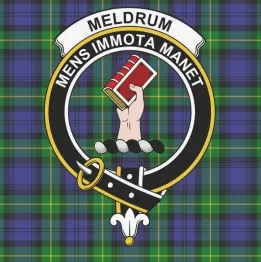
A Latin motto, ‘mens immota manet’ (the steadfast mind endures), was used for a Meldrum clan badge (a circular graphic device signifying allegiance to the clan leader). The central design is a book (sometimes shown open, sometimes closed) held aloft by a forearm. Although this motto and image are described in some heraldic reference books, and are offered for sale by commercial purveyors of Scottish heraldry products, the medieval barons of Meldrum would not have encountered a printed book.
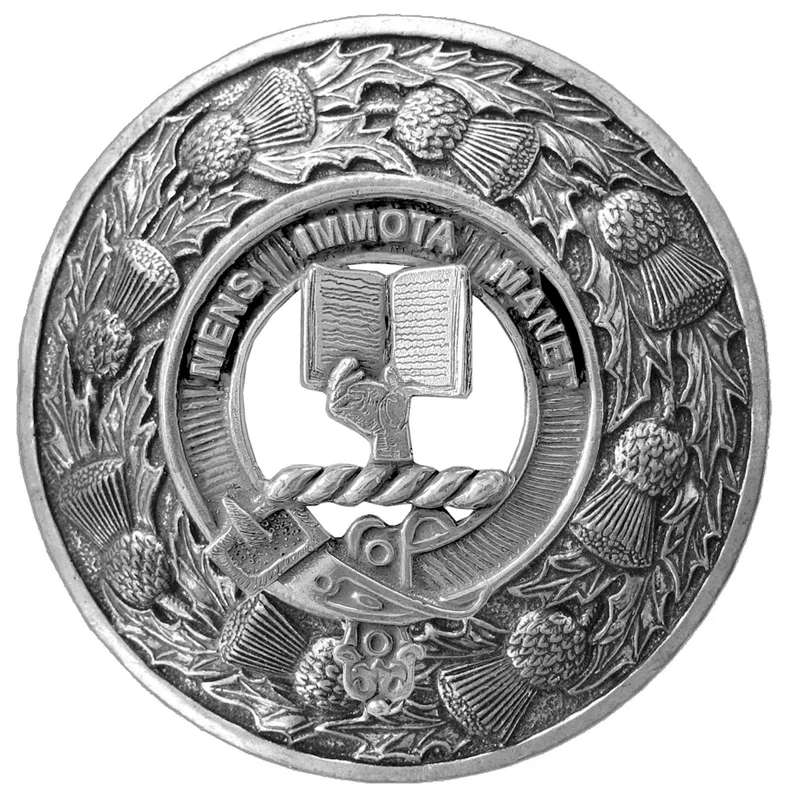
in metal, wtth a border of thistles.
Court registrations of Meldrum Coats of Arms
The Court of the Lord Lyon in Edinburgh was established in 1672 to register and legally supervise uses of armorial imagery in Scotland. It has registered Arms for five people with the surname Meldrum. The first registration, in 1672, was for George Meldrum of Crombie (the bishop of Marnoch).. Two more permits were given in 1910 to Janet Balfour Meldrum and Eliza Russell Meldrum, for similar designs that included elaborate foliage, banners, a helmet with plumage, and a non-Meldrum motto and shield symbols. Two different designs were registered to Robert Gillespie Meldrum in 1978 and John Alexander Keith Meldrum in 1984; these also did not include the original Meldrum demi-otter rampant or either of its two common mottos.
The Court now classifies the Meldrum clan as ‘armigerous’—a term meaning that it dates back to an identifiable single founder/chief but its properties and lineage later passed to male members of other clans and it no longer has a directly descended chief carrying the original surname.
Tartan
The heyday of the Meldrum clan was several centuries before tartan fabrics were commercialised in Scotland during Queen Victoria’s reign, so there is no recognised Meldrum plaid design or colour scheme. Meldrums generally are advised to wear one of the tartans associated with the Forbes or Gordon clans, whose leaders then owned the major Meldrum estates.