
Meldrum House
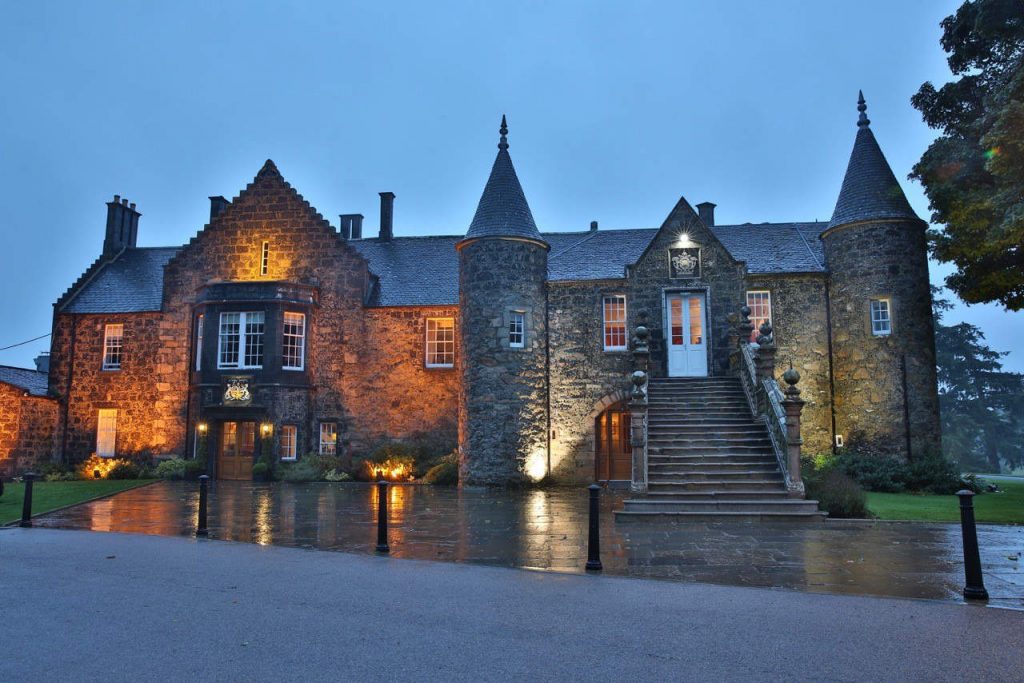
Meldrum House was originally built in the mid-late 13th century by Sir Philip de Phendarg, the first Baron of Meigdrum. It occupies the Auchineve territory that was granted to Sir Philip’s father, the Norman knight Philippus de Phendarg, by Radulf de Lamley, the Abbott of Arbroath, in 1236.
Sir Philip constructed the original baronial residence, a stone tower house, on a rock platform at the highest point of the estate. This remains the nucleus of substantial additions by later owners in the 18th, 19th and 20th centuries.

Several generations of Meldrums lived there until the mid-15th century, when the last Meldrum clan chief, Sir William Meldrum of that Ilk, died. His only daughter resigned her legacy to her husband, Sir William Seaton (Seton). He was the second son of Sir Alexander Seaton, who declared himself the Dominus de Gordon (first lord of the Gordon clan) in a parliamentary ceremony in 1449. William Seaton founded a new dynasty known as the Seatons of Meldrum, which owned Meldrum House for seven generations until the last male owner, William Seton, who was childless, bequeathed the estate to his elder brother’s only remaining child, Elizabeth, on his death in 1635.
A decade before he died, William Seton blocked the original archway to the courtyard and built a substantial new staircase and the current entrance. He also built a stable block, including a prominent central tower with a stone-carved Royal Coat of Arms on its north-east face.
A new dynasty of owners, the Urquharts, occupied Meldrum House from 1635, when Elizabeth relinquished it to her husband, John Urquhart of Craigfintray (known as the Tutor of Cromarty), until 1898.
In the mid-18th century, the Urquharts extended Meldrum House eastwards with two new parallel wings that were linked by a wall to form a three-sided courtyard.
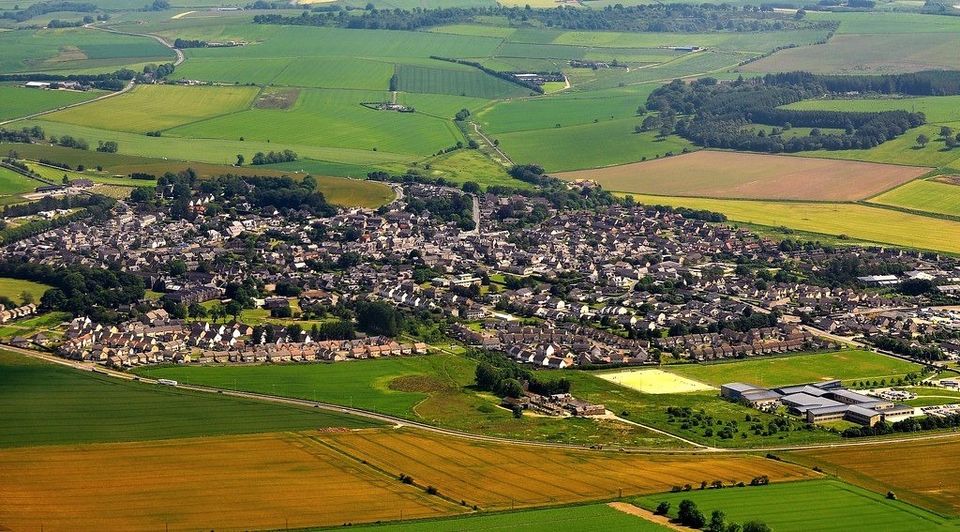 Aerial view of Oldmeldrum town.
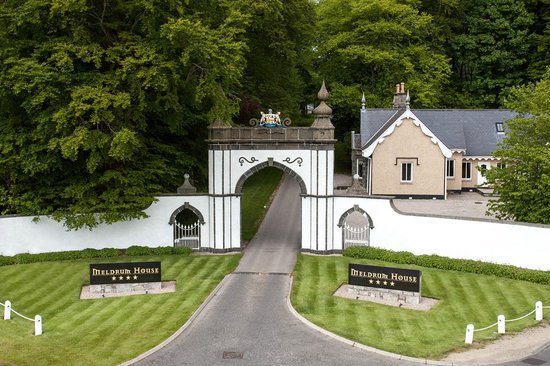
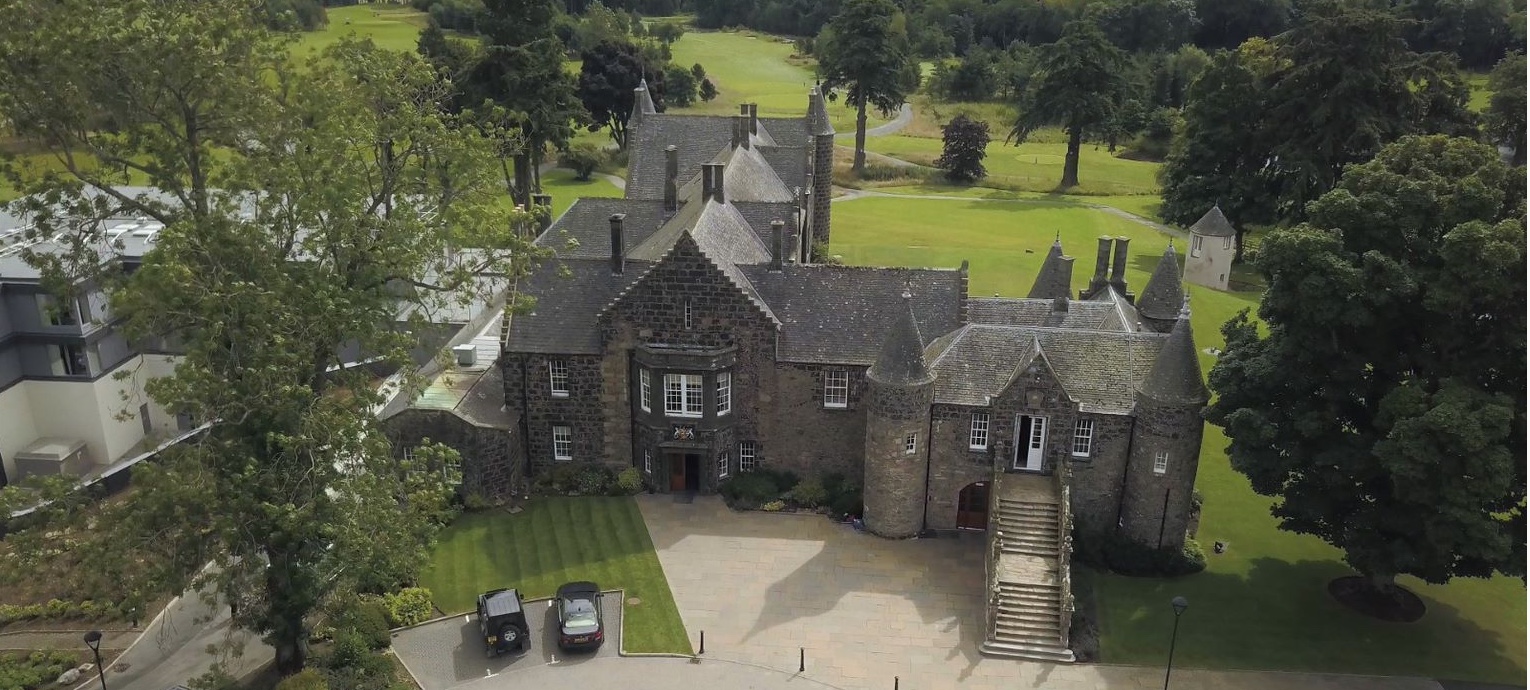
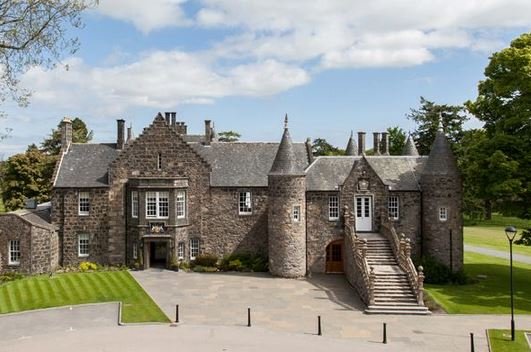
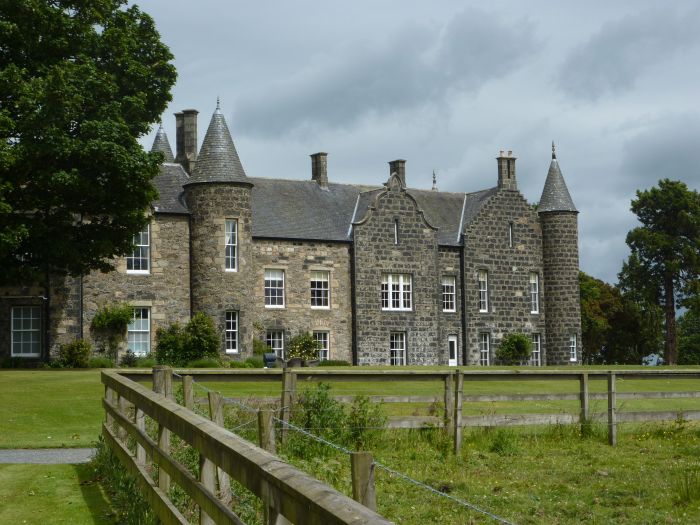
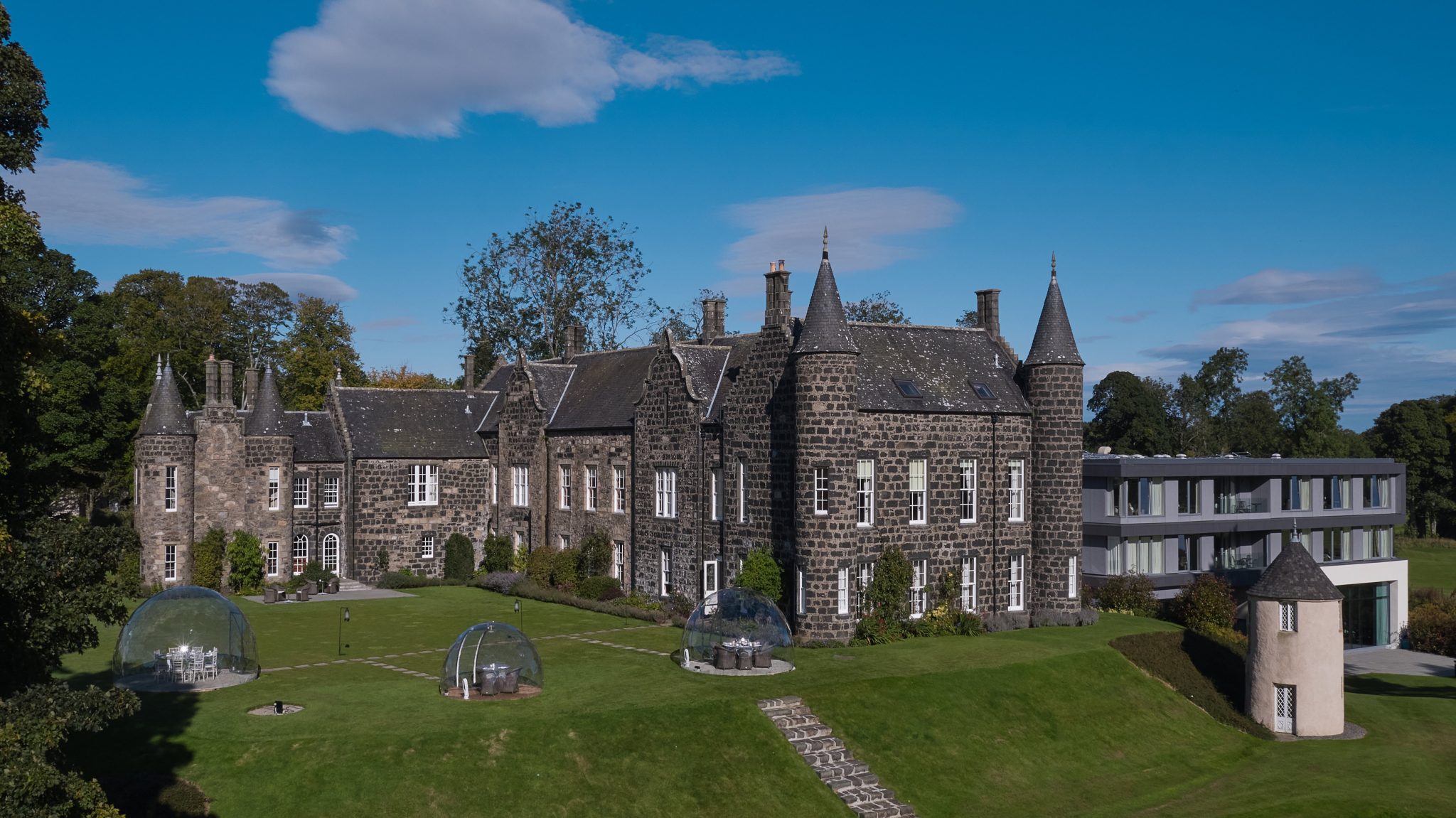
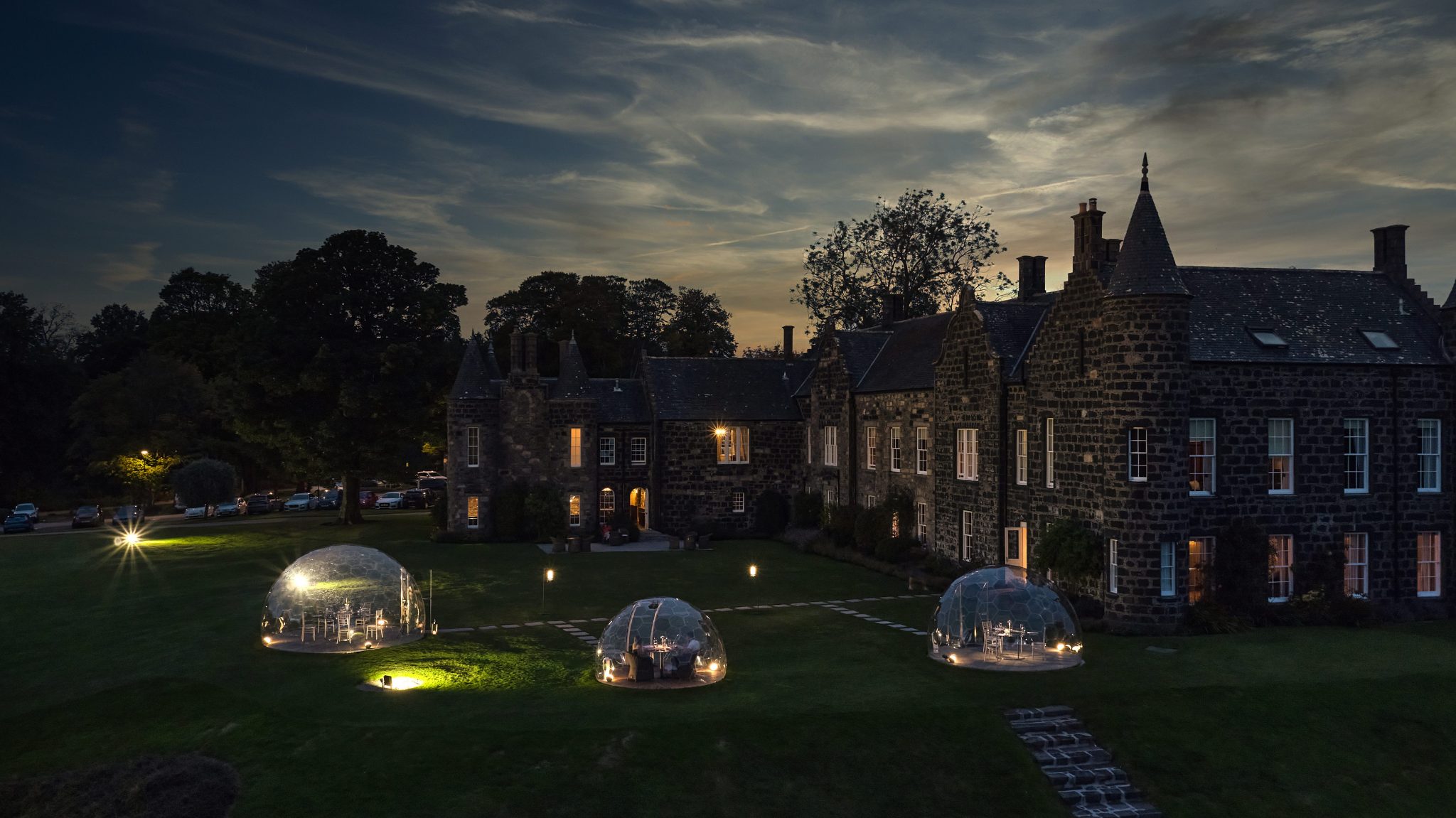
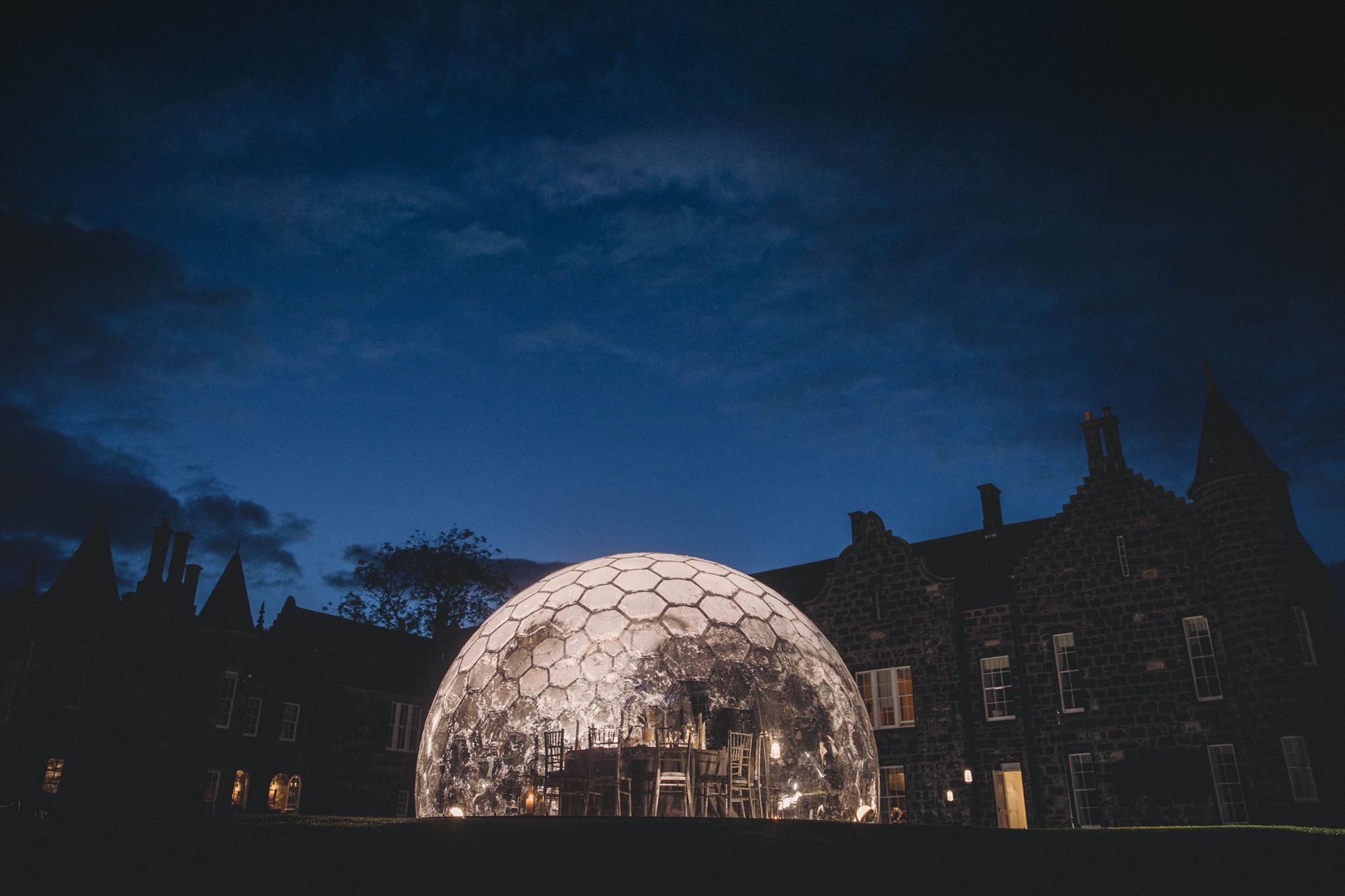
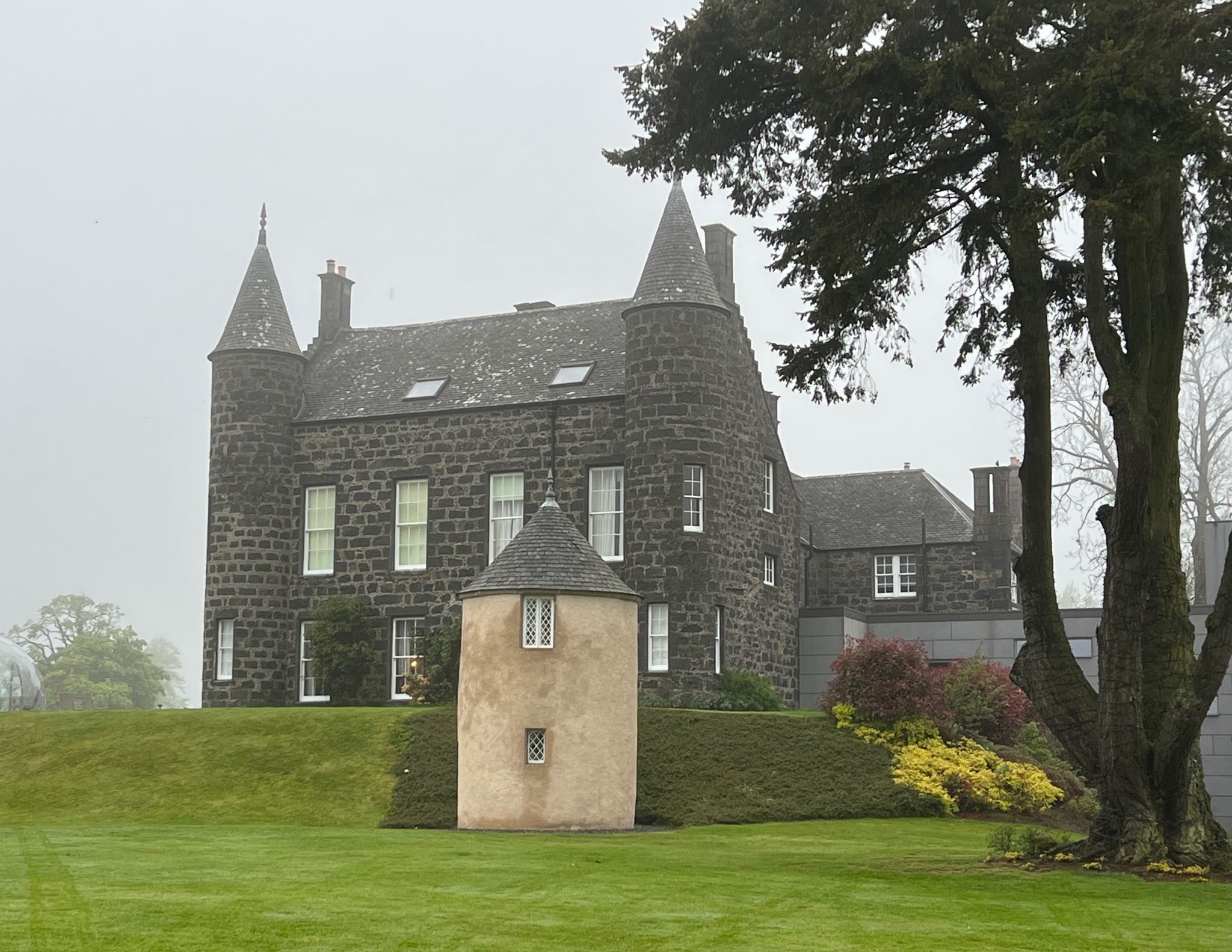
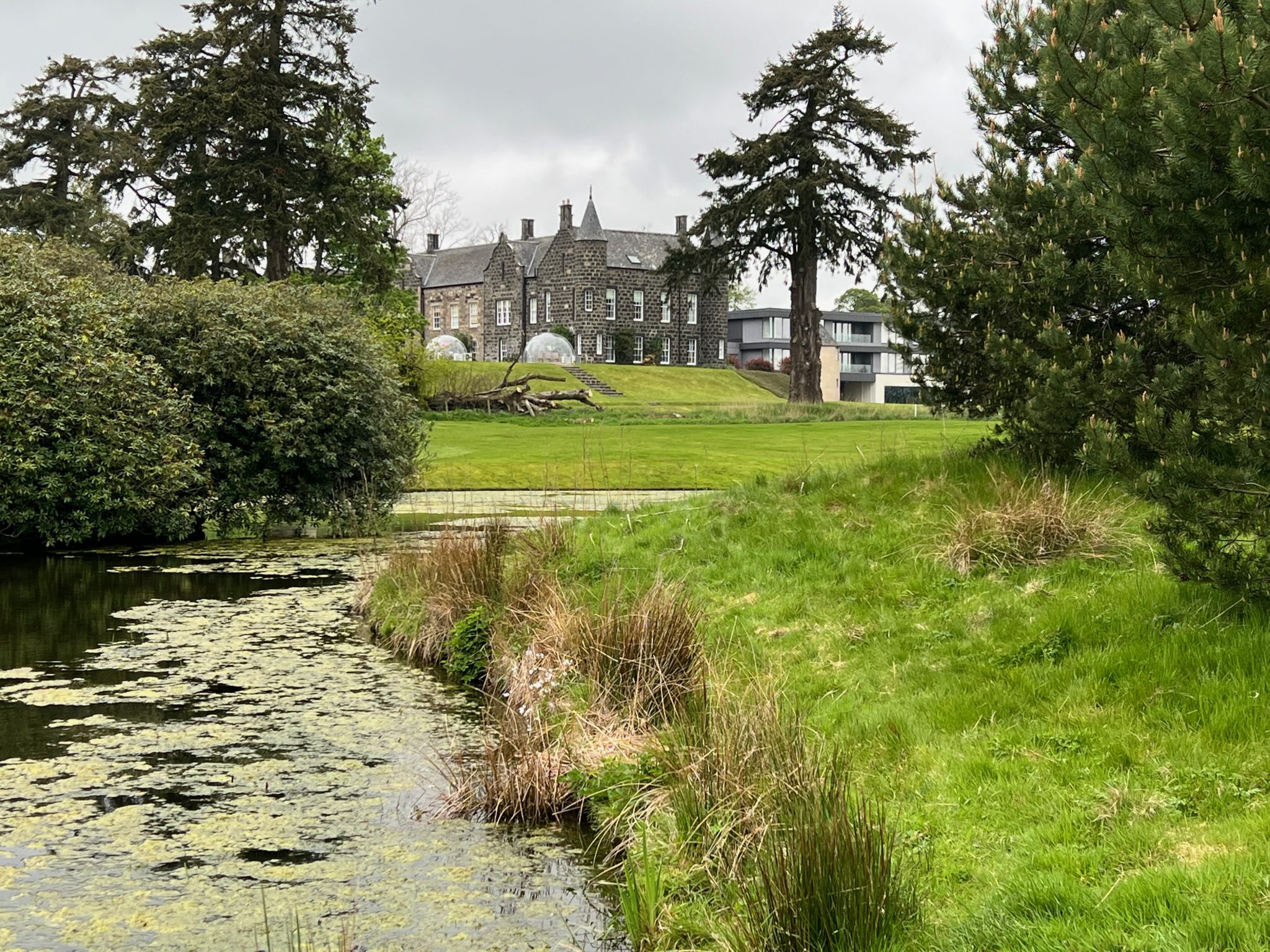
In 1836, another owner, James Urquhart of Meldrum, commissioned Aberdeen architect Archibald Simpson to renovate the house. Simpson designed a Jacobean-style, C-plan (neo-classical) mansion of 186 rooms with a grand portico and turreted pavilions. The grounds were also landscaped with the lawns, trees and plants that largely remain today.
When the last Urquhart owner, Major Beauchamp Colclough Urquhart, was killed at the Battle of Attbara in the Sudan in April 1898, the estate passed to his sister, Annie Isabella, and her husband-first cousin, Garden Alexander Duff of Hatton. Their son, Colonel Garden Beauchamp Duff, became Laird of Hatton and Meldrum, probably after World War I.
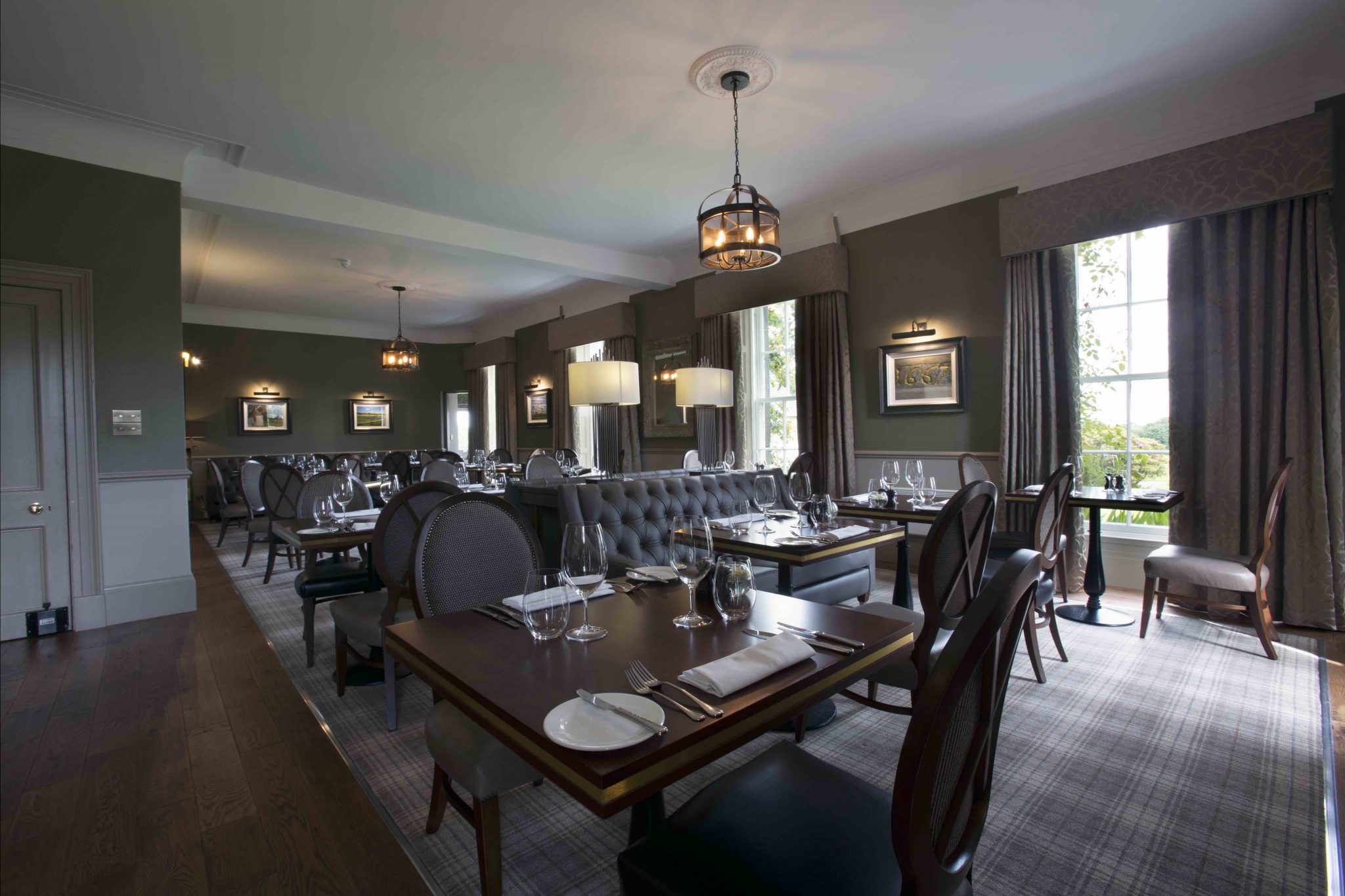
In 1934, Garden Duff’s wife, Lady Doris Duff, commissioned a Turriff architect, William Liddle Duncan, to redesign Meldrum House. His design removed the top storey of the original house and the 18th century turreted pavilion to leave the L-plan structure which remains today. Their son, Robin Duff, inherited the house in 1954, when he was serving as the personal assistant to the Maharajah of Bundi in India. On his return to Meldrum, he began to convert the estate into a hotel. Owned since YEAR? by Robert Edwards with David and Terry Buchan, Meldrum House thrives as a country hotel, with an 18-hole golf course, occupying more than 240 acres (97 hectares) of parkland.
Meldrum House is said to be haunted by the white-garbed ghost of a former occupant, Isabella Douglas. The ‘White Lady’ tends to appear during thunderstorms, favours Room 3 of the hotel, has kissed one male guest on the cheek, has looked after children on their own, and sometimes tugs the apron strings of housemaids.
References
—‘History’, Meldrum House website.
—‘Meldrum House Hotel, Oldmeldrum’, Mysterious Britain & Ireland website.
—‘A Brief History of Meldrum House’ (file), Meldrum Clan Society (Facebook).
—Walter MacFarlane (trans. Toshach Clark), 1750, Genealogical collections concerning families in Scotland, made by Walter MacFarlane, 1750-1751 (2 vols.). Edinburgh: Scottish History Society, pp. 304, 412.